
Alternative Surgical Sterilization

- Ovary Sparing Spay (females)
- $320, less than 31 lbs
- $360, 31 to 60 lbs
- $400, 61 to 100 lbs
- $440, more than 100 lbs
- Vasectomy (males)
- $240, less than 31 lbs
- $280, 31 to 60 lbs
- $330, 61 to 100 lbs
- $380, more than 100 lbs
In response to recent published scientific studies and other personal concerns, some dog owners seek a way to ensure that their dog does not reproduce yet still benefit from sex hormones throughout life. At Pets In Stitches, alternative sterilization options - ovary sparing spay (hysterectomy) and vasectomy - are offered.
Let’s explain the different surgeries…
Ovariohysterectomy (known traditionally as “spay”)
- Removes the ovaries and uterus, generally at the cervix.
- No heat cycles, no ovarian hormones, no pregnancy possible.
Hysterectomy (“ovary sparing spay”)
- Removes the uterus and cervix, while leaving one or both of the ovaries intact for physiologic, health, and/or behavioral reasons. One ovary will still produce the same hormones and allow the dog to cycle the same as if both ovaries remained, but halves the risk of ovarian cancers which is rare in dogs.
- Ovary is still functional, so heat cycle behavior and small amount of bleeding from vaginal membranes can still occur. Still attracted to males, will stand to mate. Still at risk of sexually transmitted diseases, other infection, or trauma from males. Cannot become pregnant since uterus is missing.
- Surgeon must remove the entire uterus (no “stump”); otherwise, ovarian hormone exposure can cause uterine bacterial overgrowth and pyometra (infection of the remaining uterus tissue). Thus, the surgical incision will be larger than with an ovariohysterectomy.
- Mammary tumors are the only significant health risk remaining after a hysterectomy. Fifty percent of mammary tumors are malignant in dogs. Owners must stay alert to this possibility of mammary tumors as their dog ages.
- Should still be confined away from males for the full three weeks of the heat cycle, to reduce the risk of injury from the attempted act of breeding and sexually transmitted diseases. Heat cycles generally will occur every six to nine months.
Neuter
- Removal of testicles. No sperm, no pregnancy. Typically won’t mate, but some neutered males still engage in mating behaviors.
- Eliminates risk of testicular cancers and benign prostatic hypertrophy (enlarged prostate).
- Reduces risk of prostatitis (infection of prostate)
- Can reduce inter-male aggression but does not reliably eliminate all
- Does not always eliminate male marking behavior and should not be expected to stop roaming behavior.
Vasectomy
- Removing a piece of the spermatic cord (vas deferens) to prevent transport of sperm from testicles during ejaculation.
- Still fully male otherwise and still will mate and ejaculate fluid.
- Small risk of spontaneous spermatic cord healing, restoring potential fertility.
- Does not reduce risk for prostatitis, which can be life-threatening.
- Good fencing and/or leashing and supervision still necessary when outside to control wanderlust. Wandering and attempts to mate can lead to auto injuries or death.
- Sexually transmitted diseases can also occur.
Why consider an Ovary Sparing Spay or Vasectomy?
- When breeders require sterilization in their puppy contract, yet dog owners still want the benefit of sex hormones.
- When performance and show dogs will not be used for breeding.
- For dog breeds that are prone to diseases and conditions that may occur more often when sex hormones are removed. Studies have been performed on breeds such as Golden Retrievers, Labrador Retrievers, Rottweilers, and Vizslas examining various disease and behavior developments. Results indicate that the health benefits of keeping sex hormones may outweigh the health risks of removing them. There is enough genetic breed variation that the studies’ results should not by applied to all other breeds. One should not assume that the presence of sex hormones will outweigh the benefits of traditional ovariohysterectomy or neuter for all breeds.
No perfect study examining the removal of the sex organs’ effects on all breeds, all medical conditions, and all unwanted behaviors can be performed. Thus, no single sterilization recommendation can fit every dog and owner. The decision to traditionally sterilize, alternatively sterilize, age to perform such procedures, or leave intact rests on a foundation of science, dogma, and culture.
Pets In Stitches will place a small (less than 1” long) linear tattoo near the incision at no charge to indicate a sterilized animal. Microchipping at the time of surgery is also strongly recommended. These procedures can decrease the risk that your pet, if lost, may undergo a traditional spay or neuter at a shelter or rescue before you can claim your pet. Pets In Stitches has also communicated with various local shelters and rescues that we provide alternative sterilizations in hopes that such businesses will more critically evaluate a pet that appears intact.
Before Your Dog’s Surgery
We recommend completing or collecting required paperwork to bring with you so we may process your dog’s admission quickly the morning of surgery. These include:
- Admission Form (pdf)
- Copy of most recent rabies vaccine
- Surgery Consent Form for Alternative Surgical Sterilization (pdf)
- Copy of any recent vaccination records
- Microchip Registration Form
Want to learn more?
- The gonad chronicles part 1: Neutering’s newest controversy. Karen L. Overall, MA, VMD, PhD, DACVB, CAAB. DVM360 Magazine. Dec 1, 2013. http://veterinarynews.dvm360.com/gonad-chronicles-part-1-neuterings-newest-controversy?rel=canonical
- The gonad chronicles, part 2: Veterinary research explores neutering’s elusive impact. Karen L. Overall, MA, VMD, PhD, DACVB, CAAB. DVM360 Magazine. Jan 1, 2014. http://veterinarynews.dvm360.com/gonad-chronicles-part-2-veterinary-research-explores-neuterings-elusive-impact?rel=canonical
- Determining The Best Age At Which To Spay Or Neuter. Margaret Root-Kustritz, DVM, PhD, University of Minnesota . April 24,2008. akcchf.org. http://www.akcchf.org/canine-health/your-dogs-health/determining-the-best-age-at.html
- Countering the Pushback Against Spay/Neuter. Natalie Isaza, DVM. See page 6 onwards. http://www.mariansdream.org/animal_welfare/wp-content/uploads/Countering-the-Pushback-Against-Spay.pdf
- Pet Sterilization Considerations. Bryan Baetsle, DVM. May 26, 2013. http://blog.blsvh.com/2013/05/26/pet-sterilization-considerations/
- Beyond Gonadectomy - Sterilization to Retain Normal Hormones. Sara Fox Chapman, MS, DVM, MRCVS, VetMFHom. The Alpenhorn. June 2014. Beyond-Gonadectomy (PDF)
- Can Spaying Lead to Bad Behavior? Sophia Yin, DVM. March 5, 2009. http://drsophiayin.com/blog/entry/can_spaying_make_dog_behavior_worse
- Your Dog Needs To Be Spayed Or Neutered – Right? Will Falconer DVM. Dogs Naturally. http://www.dogsnaturallymagazine.com/your-dog-needs-to-be-spayed-or-neutered-right
- Spayed but Still Sexy: Notes on heat cycles in my OSS bitch. Emily Hilgenberg. May 23, 2013. https://www.facebook.com/notes/emily-hilgenberg/spayed-but-still-sexy-notes-on-heat-cycles-in-my-oss-bitch/10151679785939515
- Ovary Sparing Spay and Vasectomy Info Group. (Facebook Group) https://www.facebook.com/groups/alternativealteringinfo
Don’t just take our word for it…
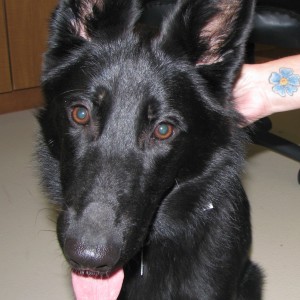
I chose my dog Nyx to have [an ovary sparing spay] done because I believe it will allow her to live the fullest and happiest life possible.
After researching a few veterinary practices willing to perform the OSS, I concluded with Dr. Rastetter at Pets In Stitches because she seemed very confident with the full sexual anatomy of dogs, and in her ability to perform the operation. She was very informative and helpful answering any questions I had.
I would recommend her practice and the OSS to anyone interested or that would fit their situation or even if you want to keep your dog’s body as natural as possible but you are against the idea of a traditional spay.

I have been looking for a local veterinarian for three years that offered the Ovary Sparing Spay procedure and Vasectomies. I contacted Dr. Rastetter with Pets In Stitches as soon I was forwarded her information. I also asked about her through various people and got nothing but high recommendations from everyone. To have these surgeries offered in the Dayton Ohio area is not only progressive, it is a good alternative to sterilization for our dogs.
I am very grateful to Dr. Rastetter and the staff at Pets In Stitches for giving my beloved Tatyana a chance for higher quality of life by reducing the high risk of cancers, pyometra, and anterior cruciate ligament injuries with the Ovary Sparing Spay procedure.

 connect with us on Facebook!
 see us on YouTube!
 pin with us on Pinterest!